
How to Tell If You Have a Bee Problem
Learn the signs of a bee infestation on your South Florida property and when to call a professional.
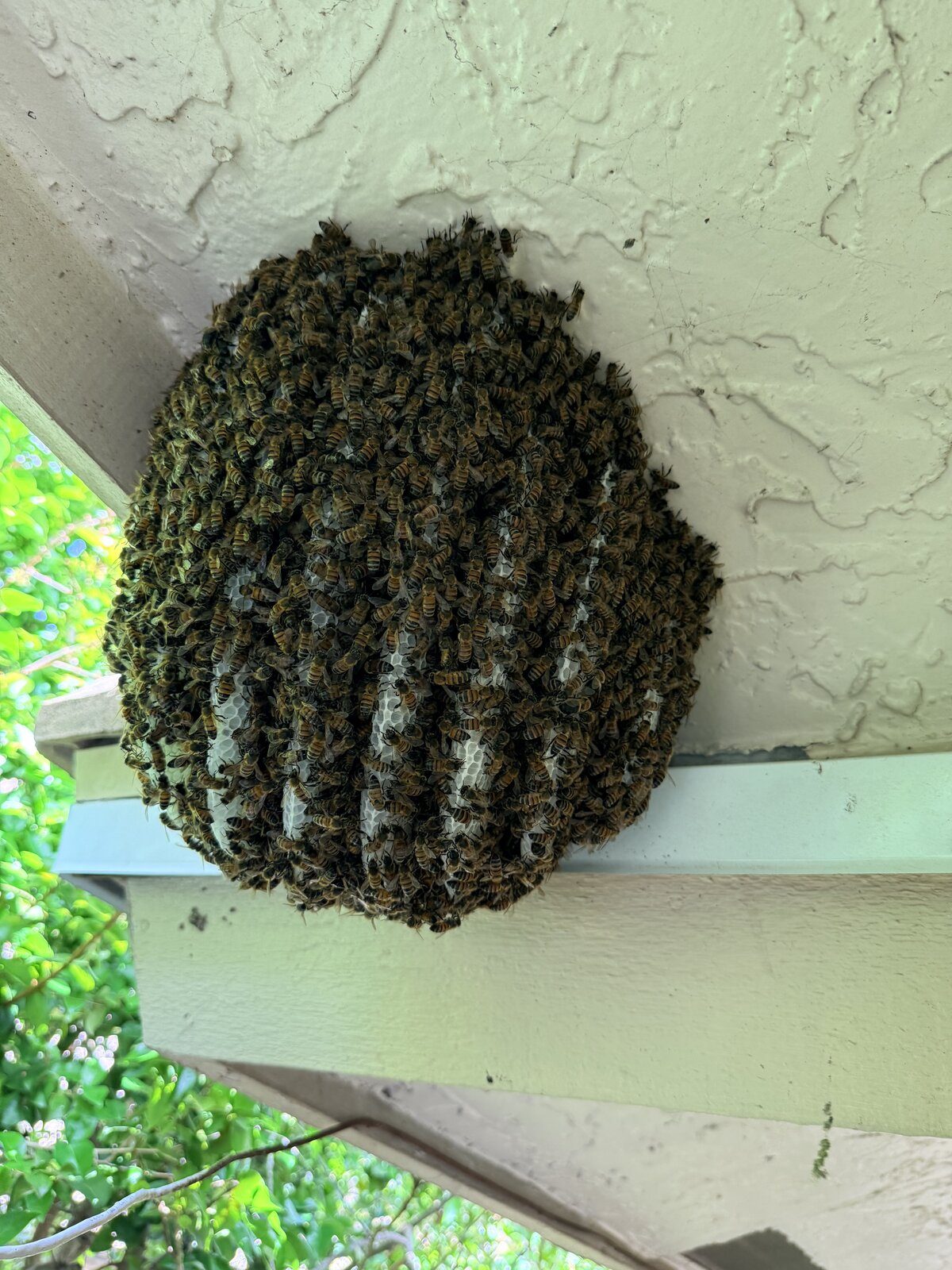
Common Signs You May Have a Bee Colony
Bees are efficient, and once a colony settles into a good location, it can grow quickly. Catching the early signs makes removal simpler, safer, and less costly.
- A steady stream of bees flying in and out of one specific spot, especially during the warmest part of the day
- A low, constant humming sound coming from inside a wall, ceiling, or soffit
- Dark staining, dampness, or a faint honey smell seeping through drywall or stucco
- A visible clump or ball of bees clustered on a tree branch, fence, or the side of a structure
- A sudden increase in dead bees on a windowsill, patio, or walkway
A few bees visiting flowers in your yard is normal. A repeated flight path in and out of the same gap, crack, or vent is the clearer sign that a colony has moved in rather than a few bees just passing through.
Where Bees Commonly Nest Around South Florida Homes
South Florida's warm, humid climate keeps bees active nearly year-round, and the region's building styles give them plenty of places to settle.
Walls, Soffits, and Eaves
Gaps around soffit vents, fascia boards, and exterior wall penetrations are among the most common entry points we see. Once inside a wall cavity, bees can build comb that spans multiple stud bays.
Roofs and Attics
Barrel tile and shingle roofs both have small gaps where bees can slip beneath the roofline into the attic or roof deck, where a colony can grow largely unnoticed until comb starts to show.
Irrigation Boxes, Meter Boxes, and Ground Cavities
Underground valve boxes and utility covers create a dark, protected cavity that bees will readily use, especially in yards that don't see foot traffic every day.
Trees, Palms, and Outdoor Fixtures
Swarms will also cluster temporarily on tree branches, palm fronds, or fences while scout bees search for a permanent home, which can look alarming even though the swarm itself is usually calm.
Swarm vs. Established Hive
Not every bee sighting is the same kind of problem.
A swarm is a temporary cluster of bees, often hanging in a tight ball, resting while scout bees look for a new home. Swarms are usually calmer since they have no comb, honey, or brood to defend yet.
An established hive means bees have already built honeycomb and are actively raising brood and storing honey. These situations involve more bees, more defensive behavior, and a more involved removal process, since all of the comb has to be removed along with the colony.
Why You Shouldn't Ignore Bee Activity
A small colony can outgrow a wall cavity surprisingly fast. Left alone, honeycomb accumulates, adding weight and moisture that can eventually affect drywall, insulation, or ceilings. Comb left behind after a poor removal can also attract a new swarm to the same spot.
There's a safety factor too. Disturbing a colony, whether accidentally with a lawnmower or intentionally by spraying it, can provoke a defensive response from the entire hive rather than just a single bee.
What to Do If You Suspect a Bee Problem
If you notice any of the signs above, the safest next step is to keep people and pets away from the area and avoid sealing, spraying, or disturbing the entry point yourself. Sealing bees inside a wall without removing them can force them to chew through drywall looking for a new way out, which often causes more damage than the original problem.
Ben & Bees provides safe, humane bee removal and live bee relocation throughout Miami-Dade, Broward, and Palm Beach Counties. If you're seeing any of these signs on your property, request a free inspection below and we'll help you figure out exactly what you're dealing with.